
I know this is a dumb question for people that work on these machines all the time, but I can't figure it out so i have to ask.
I'm trying to set the cold timing and was wondering how to do that.
this is what i'v done so far:
Step 1: front cylinder (#1) on compression stroke and TDC (both rocker arms are loose).
Step 2: I can see the TDC mark in the timing window.
Step 3: the rotor is pointing to the back of the machine and is aligned up with the contact that is going to # 1 cylinder.
Step 4: ask for help!
is this right so far?
how do i set the points. I can't find anything in the manual that make sence.
Thank you
Brian
setting the cold timing 420C
-
Willyr
- 2010 crawler

- Posts: 695
- Joined: Sat Jul 17, 2010 3:03 am
- Location: Downeast Maine (North of Ellsworth)
the way you time my 60 is.....
Bring the flywheel around to the timing mark.
remove the #1 plug
Turn on the switch
loosen cap screws that hold your distributor locked.
rotate the distributor in the block till you see the spark.
Shut off the switch
tighten the cap screws for the distributor.
tighten the plug.
done!
Bring the flywheel around to the timing mark.
remove the #1 plug
Turn on the switch
loosen cap screws that hold your distributor locked.
rotate the distributor in the block till you see the spark.
Shut off the switch
tighten the cap screws for the distributor.
tighten the plug.
done!
former owner of a 1956 420c
All help is greatly appreciated.
Proud owner of a project 1952 JD 60
http://www.youtube.com/watch?v=nFehqXVd9z4
All help is greatly appreciated.
Proud owner of a project 1952 JD 60
http://www.youtube.com/watch?v=nFehqXVd9z4

looking in the manual, all the pictures that i have found show the spark plug leads on the front part of the cap.
I am not using the electrical system at this time, just a battery, a wire from the coil to the battery, and the wire between the coil and the distributor. I bought the tractor not running and am not sure of the conditon of the engine.
I'm just trying to get spark to see if it will run.
is the timing 180° out?
I am not using the electrical system at this time, just a battery, a wire from the coil to the battery, and the wire between the coil and the distributor. I bought the tractor not running and am not sure of the conditon of the engine.
I'm just trying to get spark to see if it will run.
is the timing 180° out?
yes i have a manual. I did not intend to go into the engine if i do not have to.
the previous owner stated that the crawler ran before they parked it in the barn and disassembled it to fix the reverser.
if the oil pump is out of time, then the rotor could be pointing backwards and still be correct for timing?
does it matter which way the rotor is pointing, the cap can only go on one way, and the rotor is pointing to the #1 spark plug contact on the cap when the #1 cylinder is at TDC, and the 'spark' is visible in the timing window.
the previous owner stated that the crawler ran before they parked it in the barn and disassembled it to fix the reverser.
if the oil pump is out of time, then the rotor could be pointing backwards and still be correct for timing?
does it matter which way the rotor is pointing, the cap can only go on one way, and the rotor is pointing to the #1 spark plug contact on the cap when the #1 cylinder is at TDC, and the 'spark' is visible in the timing window.
Timing an engine can be done manually.
It really doesn't matter where the rotor is pointing, as long as the spark plug wires coorespond to the right location and firing order. On a four cylinder engine, normally pistons #1 and #4 are both up or down, in the same position. So TDC on the flywheel might be right for #1 cylinder or one turn out of phase.
It is good to try the rocker arms. When the cylinder is in the firing position, both rocker arms should be loose. In the opposite location, they will be tight because there is a short time, both valves are slightly open, the exhaust is almost closed and the intake is starting to open.
The spark occurs when the points just open. That is when the magnetic field in the coil collapses, and the high voltage is induced to the spark plug. The points make and break the ground. If the dozer is pos (+) grnd, like mine, the wire to the dist will connect to the (+) side of the coil and the (-) to the battery/ignition switch.
It takes a finite amount of time for gasoline to ignite, so set the flywheel a few degrees before TDC, and set the points just to open. By time the spark hits and the gasoline ignites, the cylinder will be at TDC and slightly after for the most power.
Octane of gasoline is the inverse of speed to ignite. The lower the octane the faster it burns and vice versa. So with a low octane gasoline (cheap gas), if the spark is too early, it will ping or try to run the engine backwards.
After the engine is running and warmed up, loosen the distributor and rotate it advanced or retarded to the best performance. Do this with the throttle as low as possible, to reduce the centrifugal force spark advance mechanism (if any). Too early will ping, too late will be a power loss (and extra hot exhaust).
Mark
It really doesn't matter where the rotor is pointing, as long as the spark plug wires coorespond to the right location and firing order. On a four cylinder engine, normally pistons #1 and #4 are both up or down, in the same position. So TDC on the flywheel might be right for #1 cylinder or one turn out of phase.
It is good to try the rocker arms. When the cylinder is in the firing position, both rocker arms should be loose. In the opposite location, they will be tight because there is a short time, both valves are slightly open, the exhaust is almost closed and the intake is starting to open.
The spark occurs when the points just open. That is when the magnetic field in the coil collapses, and the high voltage is induced to the spark plug. The points make and break the ground. If the dozer is pos (+) grnd, like mine, the wire to the dist will connect to the (+) side of the coil and the (-) to the battery/ignition switch.
It takes a finite amount of time for gasoline to ignite, so set the flywheel a few degrees before TDC, and set the points just to open. By time the spark hits and the gasoline ignites, the cylinder will be at TDC and slightly after for the most power.
Octane of gasoline is the inverse of speed to ignite. The lower the octane the faster it burns and vice versa. So with a low octane gasoline (cheap gas), if the spark is too early, it will ping or try to run the engine backwards.
After the engine is running and warmed up, loosen the distributor and rotate it advanced or retarded to the best performance. Do this with the throttle as low as possible, to reduce the centrifugal force spark advance mechanism (if any). Too early will ping, too late will be a power loss (and extra hot exhaust).
Mark
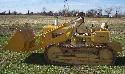
JD 2010 Crawler with Loader
Who is online
Users browsing this forum: No registered users and 4 guests